 TRACCE no. 5 – by Thomas W. Wyrwoll
Rock art research, a science without a name
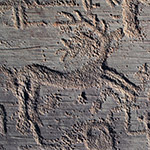
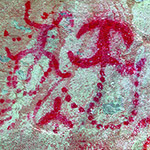
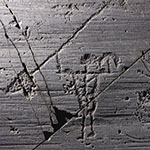
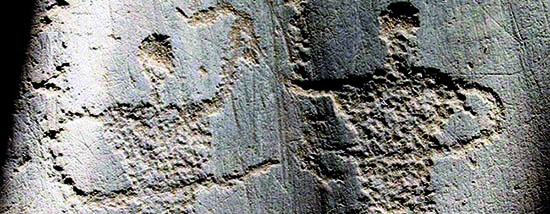
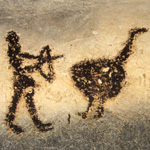
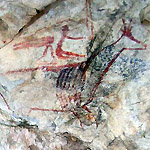
Rock art research is the science that carries out research in both rock engravings (“petroglyphs”) and rock paintings (“pictographs”).
For a long time dominated by amateurs and seen as marginal to their fields by most of the professional archaeologists and anthropologists, especially in the last decade this field of research has become more and more a science of its own.
 Inter alia, the founding of the International Federation of Rock Art Organisations (IFRAO) and the existence of the International Rock Art Congresses and other primarily rock-art related events confirm this view. The reason for this development on the one hand is that the research subject of rock art research is neither restricted to “old” and therefore archaeological nor to “new”, e. g. sub-recent and thus “ethnographic” rock art. In fact, rock art dating is nearly always controversial, and scientific dating techniques are only in a developing stage so that a distinction of “old” and “new” rock art, the definition of which will be controversial as well, is not only questionable but very often also impossible yet. A subordination of rock art research to either archaeology or anthropology for these reasons is not useful. On the other hand, both the research on sensu lato rock-art “content” and, be they so-called “scientifical” or “archaeological” ones, the efforts for rock-art dating/chronology are very much different from the methodology of conventional archaeology. Actually, rock art research has its own methodology. Therefore, justifiably not only amateurs but also “professionals” are primarily specialised in rock art research. In fact, there are good reasons to understand rock art research as a discipline of its own.
Unfortunately, though in fact rock art research is a discipline of its own, very often it is not recognised as such. One major reason for this is that it hasn't an internationally-used "scientific" name, e.g. is a Greek or Latin inspirated one.
 Therefore, to name rock art research, one is forced to use different terms in different languages. This often causes the non-recognition of rock art research as a real science in the public, including the academics, e. g. its understanding as a field of research outside the science, and, since “outlaws” of science often refer to rock art to rock art and are used to be better known than the scientists, perhaps in connection with “extra-science” and interpretations of history as influenced by cosmic “visitors”, or at least its marginalisation, with all the detrimental effects which that may have.
Other disciplines specialised in specific classes of finds which are not restricted to archaeological material or from their methodology require specialised researchers do have such “scientific” names, such as archaeozoology, archaeobotany, palynology, and so on. The colleagues working in these disciplines regard it as helpful for the – both public and scientific – recognition of their subject to have such a name, and at least when founding a scientifical organisation this naming is a point severely discussed.
A second argument for a “scientific” name of rock art research is that most languages, analogously to the English, use the term “art” when naming “rock art”. This is a reflection of an obscure twentieth-century European understanding of rock art as art – that likely doesn’t fit with what the “art” is intended to be by its producers. Only the German term “Felsbilder” (rock pictures) in the general understanding of the word describes the subject neutrally and, doing so, more correctly, but here sometimes is discredited by its use by pseudo-scientists Therefore, the author personally prefers to speak of rock engravings and rock paintings, respectively. The use of a name that is obviously problematic to describe a science has a negative impact on its prestige. To summarise the author viewpoint, the non-existence of an internationally-used “scientific” name of rock art research is a severe disadvantage for the discipline. A better naming of the discipline is therefore highly recommended. An earlier IFRAO proposal for such a new term was “pefology” which seems to be difficult to understand; the present author has little idea about the ethymology of this word, too.
On occasion of the 1996 IFRAO meeting at Swakopmund, Namibia, the author therefore has proposed the term "petroiconology" as a substitute for rock art research, combining the Greek words for rock, picture, and science.
This suggestion avoids:
- any misinterpretation that the discipline would refer to only one type of rock art, e. g. paintings or engravings
- any sub-ordination to other disciplines
- any interpretation concerning the intention of the rock “art”.

Furthermore, it can be easily understood by everyone familiar with scientific language and thus easily identified.
The Internet gives an ideal forum to discuss the above-mentioned points and the suggested new name “petroiconology”. The author’s intention is not to have the problem solved but to give rise to such a discussion as part of a general discussion on “rock art” terminology which he hopes will inter alia take place in the next issue of “TRACCE”. This discussion should be helpful to achieve the equality of status for rock art research as a discipline that it deserves.























Leave a Reply