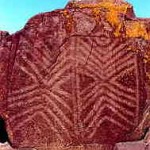
Campeche Island
TRACCE no. 4 – by Rodrigo Aguiar
Rock Art in Santa Catarina Island and adjacent areas, Brasil
Santa Catarina Island (state of Santa Catarina, Brasil) is very rich in prehistoric archaeological sites.

Archaeologic sites of Santa Catarina Island
The oldest found until now is the Pântano do Sul one from 4500 BP (Before Present), studied by father Alfredo Rorh in 1977. After Rorh’s death, almost nothing has been researched, lasting a lack in Catarinian prehistory.
Sambaqui – The Sambaquis are shells hills with over 30 meters of high. The word came from Guarani (great Indian group who lived in Brasil in colonial times) language: tamba (shells) and quí (conic hill). The “Sambaquianos” ate molluscs, and piled up the shells living over them, because it was a high and dry place.
In the Sambaqui we can find several evidences of occupation as burials, lithic pieces, fire vestiges, feeding rests (fishes, birds and mammal bones) and several adornments.
The Sambaquis are depredated by man since colonial times, in road paving and in building cement making. Later these sources were exploited to lime fabrication, which drove to a complete destruction of several Sambaquis.
The successive reoccupation of the Sambaquis by several cultures has created two periods in archaeological analysis: the Preceramic and the Ceramic.
Lithic Stations – They are vestiges left by prehistoric individuals who used diabase and eventually sandstone to sharp and polish their lithic implements. the act of scratching the tools against the rock left depressions, some in dish-like form and others in furrow-like form, leaving registrated those activities by thousands of years.
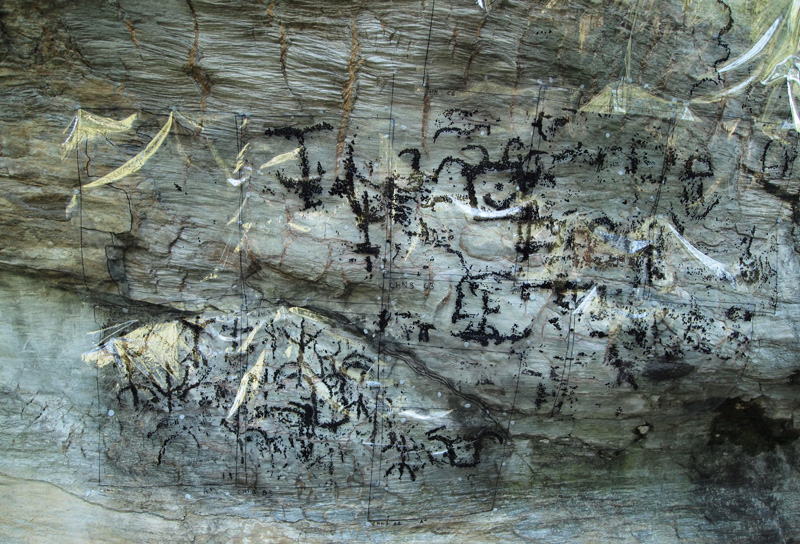
Rock Engravings – They are the most beautiful prehistoric legacy of the Island, but due to the large number of occupations by different cultures, the authors are still not positively identified.
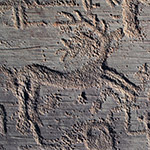
The engravings of Santa Catarina Island, following the petroglyph form, show some very particular characteristics, with no similarity in other places, what makes impossible any kind of parallelism.
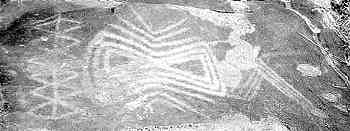
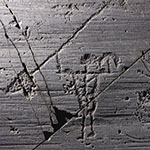
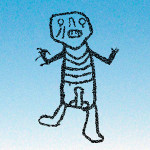
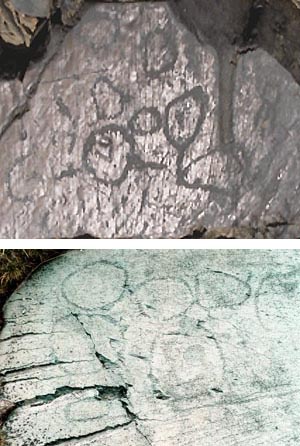
Mask – Santinho Beach (south side of the rock formation)
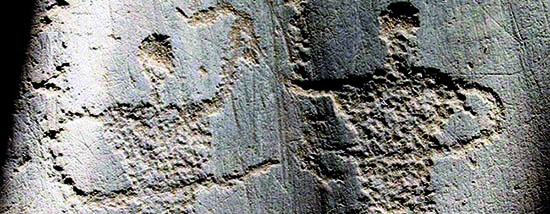
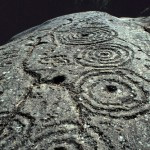
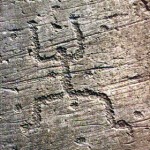
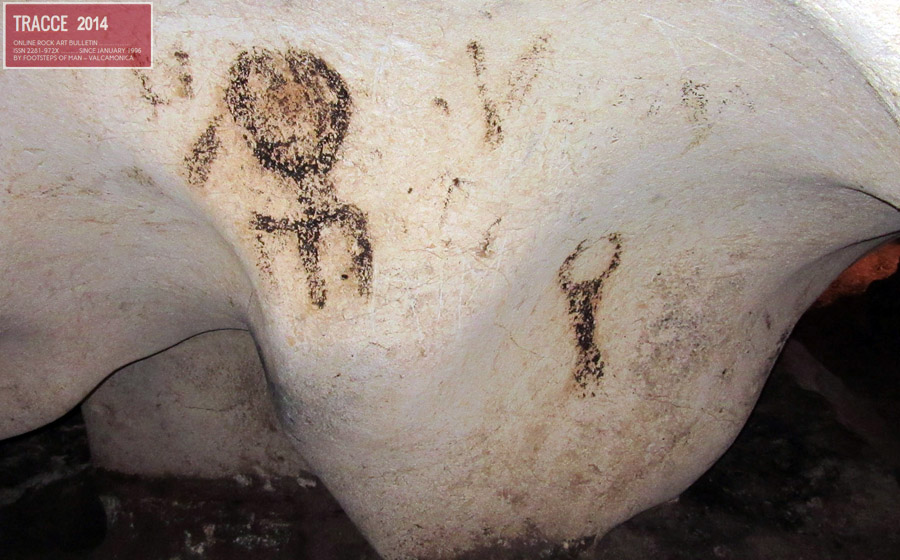
These petroglyphs which show an abstract geometrical form, present as the only common characteristic with other cultures, the symbols found all around the world, which are the concentric circles and the anthropomorphic figures. Engraved on the face of the rock, they reach a maximum depth of 3 millimeters with a 30 millimeters width. In some, the face is just pecked, meanwhile in others that one is polished and smooth.
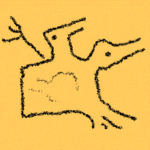
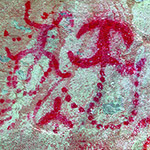
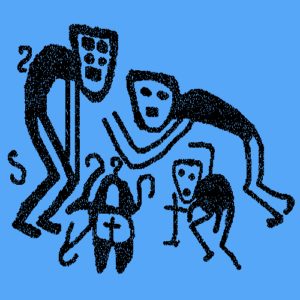
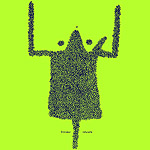
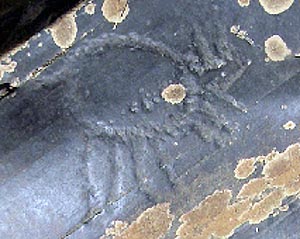
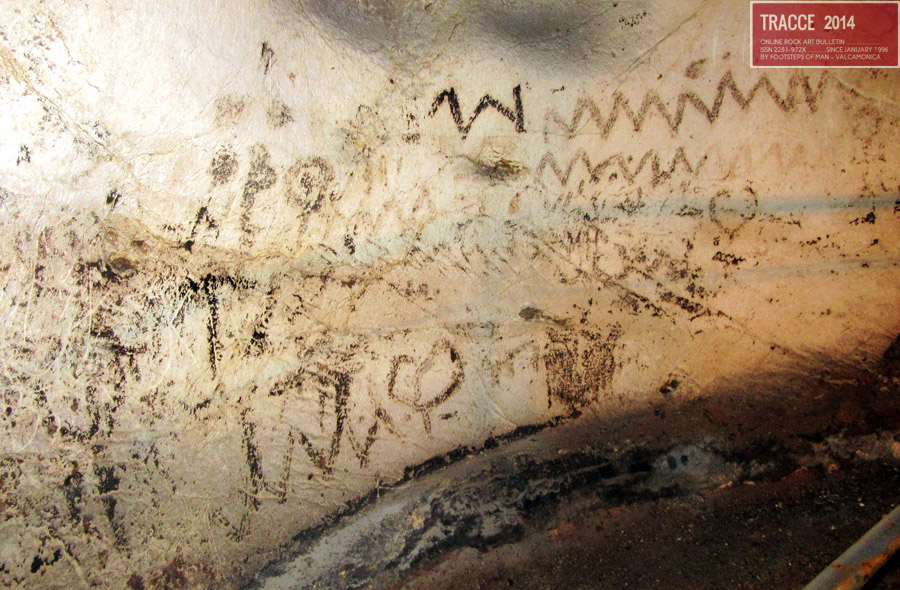
The other common symbols are the ensembles of parallel straight lines, the zigzagged parallel lines, the waved parallel lines, the ensembles of triangles, irregular quadrilaterals and the nicknamed masks, which are here illustrated.
These petroglyphs are disposed in 13 sites, curiously turned to the ocean side and on hard-waved beaches, places which pass a sensation of fear and respect, what drives me to believe that they have a fishering activity relation.
Maybe a sanctuary where the Indians might resort to some divinity represented on the inscriptions, asking for a good fishing period. Maybe they were just territorial delimitations of fishing areas.

Waved lines – Santinho Beach (north side of the rock formation)

Mask – Campeche Island
The answers are maybe under the Sambaquis, and if they are not studied soon enough, the depredation and the vandalism will bury these answers in the shadows of a pass full of blanks.
I’m working on a complete photographic survey, which has already revealed the existence of new petroglyphs and vestiges almost extinguished from them. They are already over 15. There is still a possibility to find new rock art sites. When this survey will be over, I intend to publish a catalogue book with all the pictures and the precise localization of the Santa Catarina Island petroglyphs.










Leave a Reply