Archive for Academics

Some Aspects of the Petroglyphs at Rinconada Canyon

This paper illustrates and briefly describes a selection of the rock art at Rinconada Canyon, one of the petroglyph sites near Albuquerque, New Mexico, Northern America. A tentative attempt has been made to put some of the more significant features into a proper context.

By Maarten van Hoek

Read more

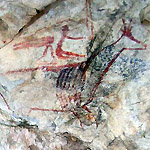
Pictographs in the Modderpoort Area

This paper discusses and (mainly) illustrates five rock art sites – all with pictographs – near Modderpoort in South Africa. It is also attempted to put the rock art in the proper cultural context with an emphasis on shamanism. All sites are on private land, so please ask permission to visit these sites well in advance.

By Maarten van Hoek Read more

Peekaboo, a Female-Male Rock Art Site, Utah

This study deals with the rock art site of Peekaboo, one of the many rock art sites in Salt Creek Canyon, Central Utah, USA. The site not only has layers of interesting pictographs, the spot is also part of a natural landscape that in my opinion is considered by the prehistoric peoples to be gendered. Several natural features very near the rock art site may have been interpreted as male and female.

By Maarten van Hoek

Read more

“Hidden” Images in Rock Art

This study is about a less recognised and controversial phenomenon in rock art production. In my opinion certain images and/or elements of an image have intentionally been “hidden” by the manufacturer, possibly for several (often differing) reasons. A small selection of examples from all over the world have been included and illustrated. However, I argue that the most “conspicuously” “hidden” elements are not even present; they are invisible (on purpose!).

By Maarten van Hoek

Read more

Detached Heads in Rock Art

This study deals with images of anthropomorphic figures in rock art and geoglyph art that clearly have been depicted with a Detached Head. It focusses on two rock art sites; Miculla in the desert of southern Peru, and La Proveedora in the NW of Mexico. Both sites feature specific anthropomorphic figures that have intentionally been drawn without the heads being attached to the body. Also geoglyphs with Detached Heads (in Peru and Chile) will be discussed. It will (very tentatively) been attempted to explain the differences between the two sites, while also the (general) problem of interpretation will be considered.

By Maarten van Hoek

Read more

Petroglyphs of Cerro Queneto – Peru

This study – about the petroglyphs at Cerro Queneto – is part of a bigger project covering several sites in the neighbouring drainages of the Río Moche and Río Virú (northern Peru). The paper offers a review and inventory of two of the three rock art groups bordering the western fringe of the alluvial fan of the Quebrada de San Juan (part of the Virú Drainage). This is the first “complete” inventory of the two little-known rock art sites that my wife and I discovered in the area.

By  Maarten van Hoek Read more

Differently Patinated Petroglyphs at Yonán Peru

Especially petroglyphs in arid or semi-arid regions often show different degrees of patination. This may result in clearly visible images as well as almost invisible (hidden) images. I selected the rock art site of Yonán in northern Peru to demonstrate how easy it is to overlook images on exposed rock panels.

By Maarten van Hoek

Read more

Monkey Petroglyphs in Coastal Peru

The rock art of the Desert Andes, the extremely dry coastal strip west of the High Andes in South America, abounds in images of all sorts of animals. Most animals are to be expected: camelids, birds, snakes and felines, for instance. However, there is one animal species that is unforeseen. It concerns the image of the monkey. This study explores the distribution if the monkey in the rock art of mainly coastal Peru, and attempts at explaining the figure.

By Maarten van Hoek

Read more

The Stepped Design in Desert Andes Rock Art

There are several motifs and images that have an unexpected rare occurrence in the rock art of the Desert Andes of South America. One such a motif is the Stepped Design that is ubiquitously depicted on ceramics, textiles and in other artefacts, as well as in architectural art. However, the Stepped Design is an anomaly (in several ways) in the rock art of coastal Chile and Peru. This study explores the distribution and attempts at explaining those anomalies.

By Maarten van Hoek

Read more

Revealing Locations of Rock Art Sites

This paper discusses the often difficult decision whether to publish the accurate location of a rock art site, or not to disclose that information. But if a scientist reveals the exact location, the information should be correct. This paper offers a number of instances where the location of a rock art site has incorrectly been published, or where a rock art panel has incorrectly been located. I hope that this paper will be regarded to be a constructive contribution in order to encourage (in general) the publication of correct information.

By Maarten van Hoek

Read more

The Chillihuay “Lord” – Peru

This paper discusses the possible meaning of two impressive petroglyphs at Chillihuay in the Ocoña Drainage of southern Peru. One petroglyph concerns the very large image of what is often called “The Lord”, which suggests that it is an image of an Andean God, possibly the well-known Staff God. Despite the many conflicts and wars that no doubt occurred throughout prehistoric Andes, it is in my mind certain that the two petroglyphs at Chillihuay offer no evidence for a militaristic theme in the rock art of the area, as is – in my opinion incorrectly – claimed by archaeologists Scaffidi and Tung, and later also accepted by Zborover.

By Maarten van Hoek

Read more

Puzzling Petroglyphs at Chillihuay -Peru

The west part of the Department of Arequipa in the south of Peru is extremely rich in rock art sites. All those sites are part of the Majes Rock Art Sphere, the rock art region where the Majes Rock Art Style dominates the area. Well-known to rock art researchers are the major sites of Mollebaya Chico, La Caldera and Quilcapampa in the Vítor Drainage, Illomas in the Manga Drainage, and – above all – Alto de Pitis and Toro Muerto in the Central ajes Valley. Less known, but equally important, is the exceptional site of Chillihuay in the Ocoña Drainage, the subject of my study.

By Maarten van Hoek

Read more

A “Lost” Petroglyph Retraced at Moro, Peru


A short note rectifying an error in my 2016-book about the rock art in the Nepeña Valley of northern Peru.

By Maarten van Hoek

Read more

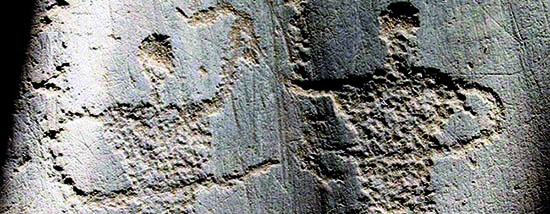
Karahan Tepe and the Oldest “Carcancha” in the World

Göbekli Tepe and Karahan Tepe, both located in the far south of Türkiye, are considered to represent the (so far) oldest monumental temples in the world. This article discusses one huge human statue discovered at Karahan Tepe. It is suggested by me to have a specific function within the restricted space it was found in.

By Maarten van Hoek

Read more

A Petroglyph Panel at Chillihuay, Peru.

This study mainly focusses on the rock art imagery on one specific and special panel at the rock art site of Chillihuay in southern Peru. This panel has an exceptionally high number of much differing anthropomorphic petroglyphs that – in my opinion – have intentionally been executed at this spot, high upon the mountain. I also argue that this collection expresses the worldview of the ancient peoples of this area, which may well be related to the Sacred Mountain of the area.

By Maarten van Hoek

Read more

The Rock Art Site of Calartoco – Chile

Calartoco in northern Chile is a heavily disturbed rock art site, because it was crossed by several types of infrastructure. This paper offers a limited view of some of the petroglyph boulders that have been “rescued” near the original, destroyed site.

By Maarten van Hoek
Read more

El Vagón Violated (Peru).

This short paper reports the unexpected destruction and violation of an important rock art site – El Vagón – in the Moche Drainage of northern Peru. In 2019 I published a full account of this site, based on several surveys by my wife and me. In 2017 there was no destruction visible, but in August 2024 I found (via Google Earth) out that the site had been destroyed by heavy machinery. This short paper discusses the damage, often referring to my earlier publication. It is sad that the site survived from the Formative Period (2000-500 B.C.) up to at least 2022, and was then recklessly and shamefully violated and destroyed in a few days, apparently without any warning or any official archaeological survey. Permission should never have been granted!

By  Maarten van Hoek

Read more

The Cupules of Cerro La Cal, Peru

This short study presents an update of the petroglyphs (focussing on cupules) recorded by my wife Elles and me at the rock art site of Cerro La Cal, Lambayeque, northern Peru. Also a selection of rock art sites featuring cupules in the Desert Andes is included.

By Maarten van Hoek
Read more